

Core Takeaways
- Faltering usually reflects effort mismatch, not lack of discipline.
- Early signs show up in motivation, behavior, and energy.
- The body often signals mismatch before conscious awareness.
- Pushing harder when capacity drops increases burnout risk.
- Adjusting effort levels preserves continuity and momentum.
- Small recalibrations prevent full disengagement.
Most people assume that faltering means a lack of discipline. I’d highly recommend that you don’t see it that way. More often, faltering happens because the effort level no longer matches real life. Work pressure increases, family demands rise, travel happens, or sleep drops. The body and mind notice this shift before you consciously do.
Signs You’re Pushing Too Hard
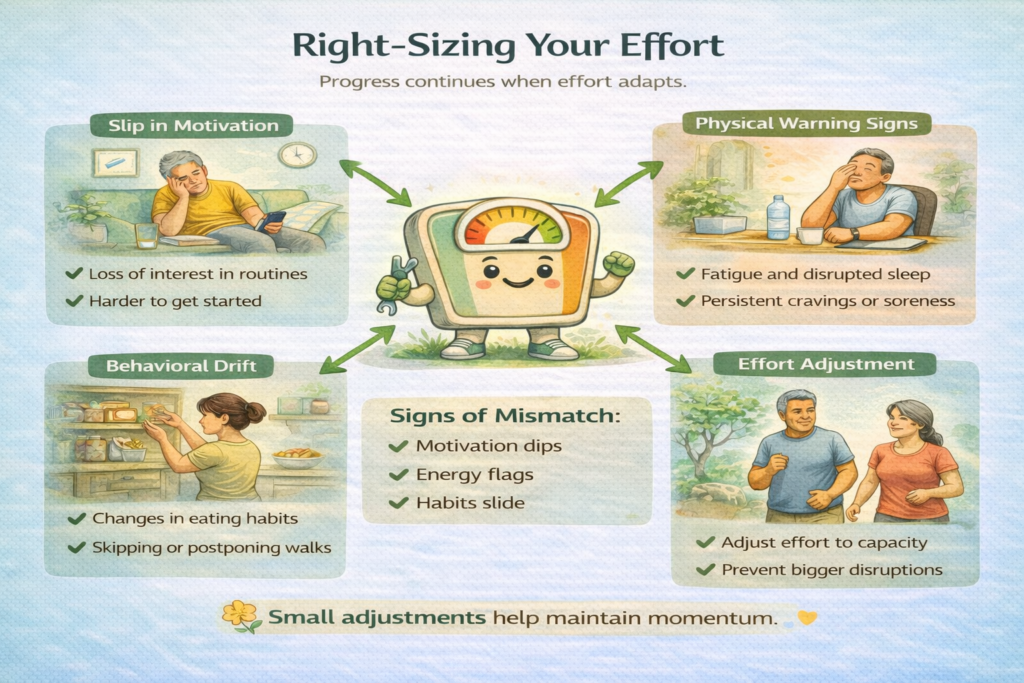
The first signs are rarely dramatic. I often see them show up as growing irritation around food decisions, resistance to routines that once felt manageable, or an urge to skip steps entirely. Nutrition starts to feel heavy. Movement feels optional rather than grounding. Please do not see them as character flaws!
When Motivation Drops
Another common sign is unexplained loss of motivation. People say, “Nothing changed, but I just don’t feel like doing it anymore.” In reality, something usually has changed beneath the surface. Stress, sleep debt, or emotional load has increased, even if subtly. When motivation drops suddenly, it’s often because effort has exceeded capacity.
Pick Up On Physical Clues
The body often speaks before the mind does. Increased fatigue, disrupted sleep, persistent cravings, or feeling sore longer than usual can all indicate that recovery is insufficient. I think it’s important to listen here instead of pushing through. Ignoring these signals usually leads to bigger disruptions later.
Don’t Sweat That One Bad Day
One off day doesn’t mean much, but when skipped walks become the norm, late meals happen repeatedly, or snacking increases quietly, it’s a sign that something needs adjustment. Behavioral drift is an early warning system.
Put the Right Effort Level
When people ignore effort mismatch, they often respond by pushing harder. This I’ve found usually accelerates burnout. The gap between expectation and reality widens, and eventually people stop altogether. Small adjustments early prevent full disengagement later.
Dropping from a higher effort level to a lower one is not regression. It’s strategic. It preserves continuity and keeps habits alive during demanding periods. Progress continues when effort adapts. A useful question I often suggest is: “Does what I’m trying to do still feel doable on a tired day?” If the answer is “no”, effort probably needs recalibration.
In the next lesson, we’ll look at how to consciously step effort up or down without guilt, so adjustment feels intentional rather than reactive.

