

Core Takeaways
- Nutrition is best viewed as a way to reduce daily metabolic load on the liver.
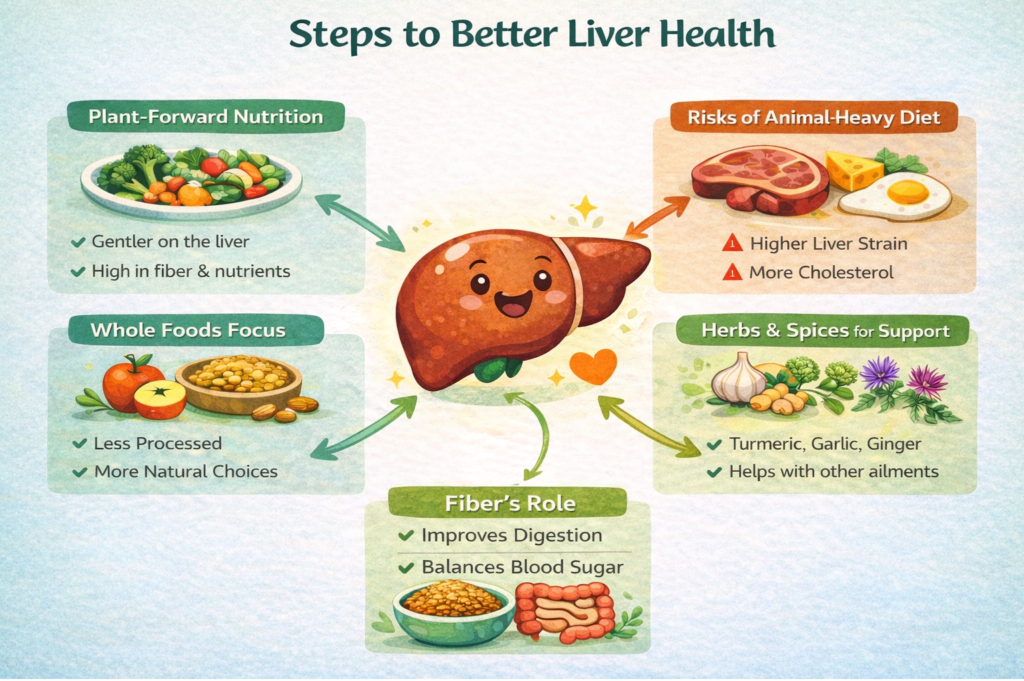
- Plant-forward eating creates a gentler metabolic environment for liver health.
- Animal-heavy nutrient patterns are linked to higher long-term liver risk.
- Whole foods matter more than whether a diet is technically vegetarian.
- Many familiar Indian herbs and spices support metabolic health when used consistently.
- Lower effort levels can still benefit from gradual, plant-heavy shifts.
When it comes to fatty liver, nutrition is often framed as a set of rules to follow or foods to avoid. I want to reframe that model. Nutrition, in this context, I think is best understood as a way to reduce the daily metabolic load placed on the liver. The goal is not perfection. It’s creating enough relief, often repeatedly, for the liver to regain flexibility over time.
Why a Plant-Forward Approach Makes Sense
A whole-food, plant-forward pattern naturally reduces liver strain.
Plant foods tend to be:
- Lower in calorie density
- Higher in fiber
- Slower to digest
- Less likely to overwhelm insulin signaling
From a metabolic standpoint, this creates a gentler environment for the liver, especially when applied consistently. This is why a whole food, plant-based pattern sits at the higher end of the effort spectrum. It is effective, but it also requires readiness and intention.
What Research Suggests About Nutrient Patterns and Liver Risk
Long-term population data suggest that the types of nutrients we consume matter for liver outcomes.
In a large U.S. study with over 9,000 participants, that tracked diet composition and liver disease risk over more than a decade, higher intake of protein and cholesterol which is in animals, was associated with greater risk of serious liver disease, while diets higher in carbohydrates were linked to a lower risk of liver-related hospitalization or death.
This doesn’t mean carbohydrates are “magic,” but it does support prioritizing plant-based carbohydrates and fiber over excessive cholesterol and animal fats as a way to reduce long-term liver burden.
This Is Not an All-or-Nothing Decision
It’s important not to confuse “plant-forward” with “plant-only.” Not everyone is ready to give up dairy or meat, and forcing that change prematurely often backfires.
Thank back to the reflection exercise we just did. If it suggested that a lower or moderate effort level fits your life right now, the goal is not to jump straight into a strict plant-based approach. The goal is to move in that direction thoughtfully, at a pace you can sustain.
Matching Nutrition to Your Effort Level
At lower effort levels, nutrition may focus on:
- Increasing the proportion of plant foods on the plate
- Reducing portion sizes of dairy, meat, and processed foods
- Improving meal timing and spacing
- Avoiding late-night eating
At moderate effort levels, this may look like:
- Having plant-based meals most days
- Limiting animal products to occasional servings
- Prioritizing minimally processed foods
- Becoming more consistent rather than perfect
At higher effort levels, a fully whole-food, plant-based pattern becomes a clear and intentional choice rather than a forced experiment. This is a little bit easier if you are already “vegetarian” (usually this means lacto-vegetarians; those that consume dairy and plant based foods).
Why Dairy and Meat Matter for the Liver
Dairy and meat consumption are not discussed here as moral issues. That has very little to do with your physical health, so let’s keep that out.
They matter because they:
- Are calorie and cholesterol dense
- Are often consumed in larger portions than intended
- Can increase insulin demand when paired with refined carbohydrates
- Add to overall metabolic workload when eaten frequently
Reducing frequency and portion size alone can significantly reduce liver strain, even without complete elimination.
If reducing or skipping milk feels intimidating, don’t worry—there are plenty of well-tolerated, widely available alternatives today. Options like soy, almond, oat, and pea milks can fit seamlessly into tea, coffee, cooking, and daily routines without feeling like a compromise. To make choices easier, we’ve put together a simple comparison guide you can review here: Comparing different types of plant-based milks
For a deeper understanding of why we strongly advocate reducing dairy, ultra-processed foods, and meats, we encourage you to explore our podcasts and the book EverHealth. Both go beyond recommendations to explain the underlying science, clinical reasoning, and real-world evidence that shaped this approach—so you’re not just following advice, but understanding it.
Fiber Is Doing Quiet, Important Work
One of the most overlooked aspects of plant-forward eating is fiber! Fiber slows digestion, improves satiety, and reduces rapid swings in blood sugar and insulin. Over time, this reduces how often excess energy is routed to the liver for storage. This is one reason plant-heavy meals tend to feel more forgiving.
Avoiding the “Health Food” Trap
Not all plant-based foods are metabolically helpful. Highly processed plant foods, refined grains, sugary snacks, and packaged convenience items can still overload the liver, even if they are technically vegetarian. Whole foods matter more than those that come out of package.
Using Familiar Herbs and Spices More Intentionally
One advantage many of us from Indian households already have is that several ingredients associated with metabolic and liver support are part of everyday cooking.
This section is not about adding exotic supplements or chasing specific compounds. It’s about using familiar herbs and spices more consistently and intentionally, within meals you already prepare.
Ginger
Ginger is widely used in Indian cooking, from dals to sabzis to teas. Beyond flavor, ginger supports digestion and may help moderate post-meal metabolic stress. If ginger is already part of your cooking, consider increasing how often you use it rather than how much you use at once. Fresh ginger in daily cooking or as a simple ginger tea can be an easy, low-effort addition.
Turmeric
Turmeric is another staple in Indian kitchens. Curcumin, its active component, is often discussed in research, but you don’t need to think in terms of extracts or capsules. Regular culinary use, especially when paired with black pepper and fats already present in meals, allows for steady, low-level exposure over time. The emphasis here is frequency, not intensity.
Garlic
Garlic is commonly used as a tadka in Indian cooking. Its sulfur-containing compounds, including allicin, are associated with metabolic and cardiovascular support. Using fresh garlic regularly in tempering or cooking is preferable to relying on powders or supplements. If garlic is already in your meals, simply making it a consistent part of daily cooking can add up.
Green Tea and Coffee
Green tea is less traditional but widely adopted, while coffee is increasingly common. Both contain plant compounds associated with metabolic benefits when consumed regularly and without excess sugar or creamers. If you already drink tea or coffee, consider simpler preparations and moderate consistency rather than large quantities.
Citrus Fruits
Citrus fruits, commonly used in Indian households, contain flavonoids such as hesperidin. Incorporating whole citrus fruits or using lemon in meals supports a broader plant-rich pattern rather than focusing on isolated compounds.
What About Western Foods?
Resveratrol-rich “foods” such as red wine and ginseng are less central to everyday Indian households. Similarly, not everyone loves Oats or cranberries. Rather than chasing these specifically, the focus in this course remains on ingredients already embedded in your food culture. Consistency with familiar foods generally offers more benefit than occasional use of unfamiliar ones. However, if you do not mind adding them, please do so as the foods mentioned here are clinically known to help keep the liver healthy.
A Simple Guiding Principle
If an herb or spice is already part of your kitchen, the most effective change is often to use it more often, not to use it in larger amounts or as a supplement. Small, repeated exposures through food tend to align better with long-term habits and effort levels.
A Practical Way to Start
So where do you start you ask? Well, rather than overhauling everything, I suggest starting with one simple shift:
- Make at least one main meal each day predominantly whole-food and plant-based
- Eat it earlier rather than later
- Notice how energy, hunger, and digestion respond
In the next lesson, we’ll look more closely at specific food patterns and combinations that tend to increase or reduce liver strain, without turning nutrition into a rigid checklist.

