

Core Takeaways
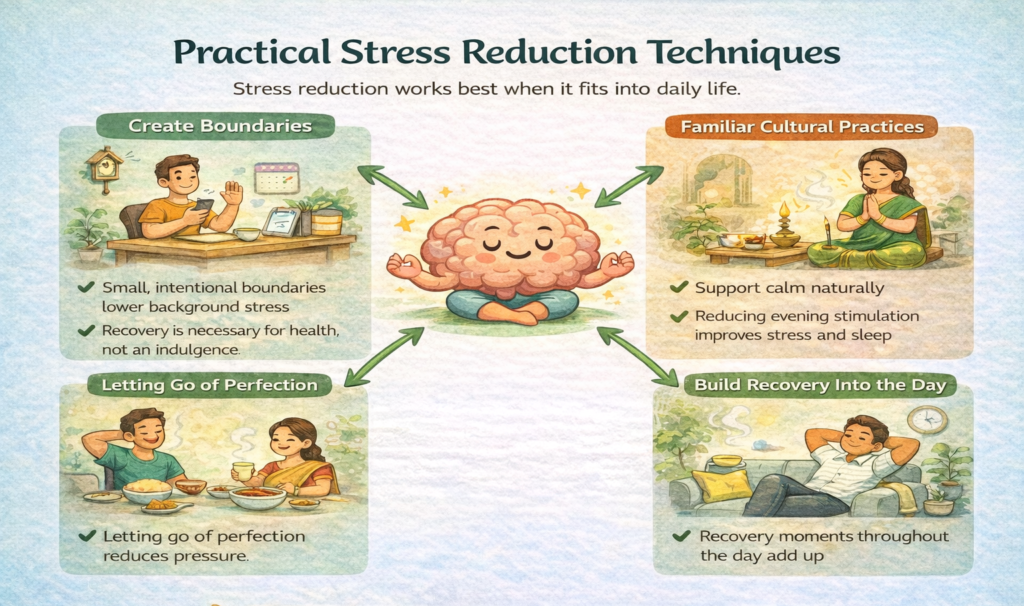
- Stress reduction works best when it fits into daily life.
- Small, intentional boundaries lower background stress.
- Recovery is necessary for health, not an indulgence.
- Familiar cultural practices can support calm naturally.
- Reducing evening stimulation improves stress and sleep.
- Letting go of perfection reduces pressure.
- Micro-recovery moments throughout the day add up.
When people hear “stress reduction,” they often imagine adding something new to their schedule.
I think that’s exactly why most stress advice fails.
If stress reduction feels like another task, it increases pressure rather than relieving it. What works better is adjusting how existing parts of life are handled, especially within Indian households and communities.
Create Boundaries
In many Indian families, 24/7 availability is assumed. No? Phone calls, messages, requests, and obligations flow throughout the day. While this reflects care and connection, it often leaves little space for recovery. I’ve found that stress reduces not when responsibilities disappear, but when small boundaries are introduced intentionally.
Simple changes like delaying non-urgent responses, limiting late-night calls, or setting a clear end time for daily obligations can lower background stress without disrupting relationships.
“Doing Nothing” is Recovery
Many people feel uncomfortable resting unless everything else is done. I think this mindset quietly drives chronic stress. Sitting quietly, stepping outside, or taking a short break is often labeled as unproductive, especially in households where constant activity is the norm. In reality, these pauses allow the nervous system to downshift. Recovery is not the absence of responsibility. It’s what allows responsibility to continue without burnout. So do just that – sit quietly, even do a short meditation, step outside, or taking a short walk.
Our culture already includes practices that support calm and recovery. Prayer, chanting, slow breathing during puja, listening to devotional music, or sitting quietly after meals all slow the nervous system. These moments don’t need to be formal or extended to be effective. Using familiar practices intentionally often feels more natural than adopting new techniques.
Evenings often stay busy with screens, conversations, and unfinished tasks. I’ve found that reducing stimulation after dinner helps sleep quality and stress levels. Dimming lights, lowering screen use, and keeping conversations calmer signal the body that it’s safe to wind down. This shift supports recovery without changing schedules dramatically.
Stress increases when people try to manage these events perfectly, whether through food choices, hosting expectations, or social performance. I think giving yourself permission to participate without optimizing everything reduces stress more than strict control ever could. One imperfect day of course does not undo progress.
Build Recovery Into the Day
Recovery works best when it’s woven into daily life. Short pauses, quiet moments, and intentional slowing sprinkled throughout the day support the nervous system more effectively than one long relaxation attempt at night. Believe me, these micro-recoveries add up.
Choosing Calm
Many people feel the need to stay mentally engaged at all times. News, social media, and constant updates keep the brain alert even when the body needs rest. Reducing mental input, especially later in the day, allows stress hormones to settle. Calm often begins with less information, not more.
This completes the stress and recovery module. In the next section, we’ll focus on how to reassess, adjust effort levels, and recover momentum when life inevitably gets in the way, so progress continues without guilt or restart cycles.

