

Core Takeaways
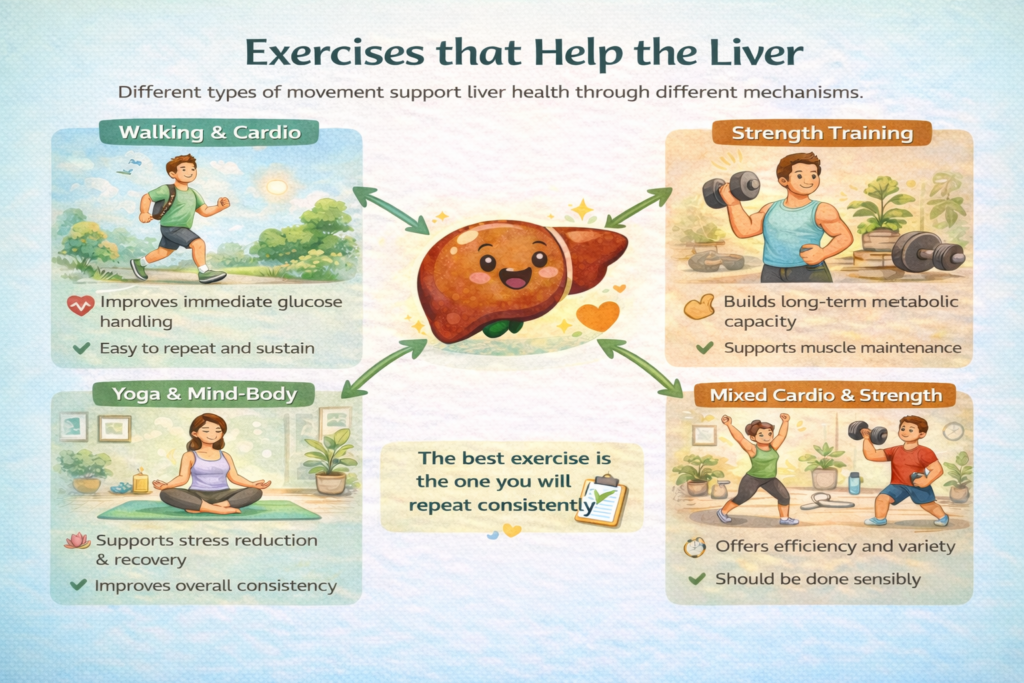
- Different types of movement support liver health through different mechanisms.
- Walking and cardio improve immediate glucose handling.
- Strength training builds long-term metabolic capacity.
- Yoga supports stress reduction and recovery.
- Mixed workouts offer efficiency when done sensibly.
- The best exercise is the one you will repeat consistently.
People often ask me which exercise is best for fatty liver. I think that question misses the point a little. Different types of movement help the liver through different mechanisms, and none of them work if you don’t do them consistently. The goal here is not to optimize. It’s to choose what fits your life so movement actually happens.
Walking and Cardio
I often start with walking and light cardio because they’re easy to repeat. Cardio helps muscles pull glucose out of the bloodstream, especially after meals. This reduces how much excess energy the liver has to deal with in the moment. It also improves insulin sensitivity over time. I think walking works particularly well because it doesn’t feel like exercise, which means people do it more often.
Strength and Resistance Training
Strength training helps the liver in a quieter but powerful way. Muscle acts like a storage tank for glucose. The more muscle you maintain, the more space glucose has to go without being converted into fat by the liver. This matters even if weight loss is not the goal. I’ve found that simple body-weight exercises, resistance bands, or light weights done a few times a week are more sustainable than complex gym routines.
Yoga and Similar Mind-Body Practices
Yoga helps the liver indirectly. It reduces stress, improves sleep quality, and lowers cortisol levels, all of which influence insulin signaling and metabolic health. While yoga doesn’t burn a lot of calories, it supports recovery and consistency. I think yoga works best when people stop expecting it to do everything and let it play its role as a stabilizer.
Mixed Cardio and Strength
Many people now use short mixed workouts found on platforms like YouTube. These sessions combine light cardio with strength movements and work well for people who want efficiency. They can improve insulin sensitivity, support muscle maintenance, and fit into busy schedules. The advantage here is variety and time efficiency. The risk is doing too much too soon. I usually suggest starting slower than you think you need to.
Types of Exercises
You can download the above Types of Exercises Table for easy reference outside of this course.
How I Suggest Choosing
I think the best choice is the one you can imagine doing even on a busy or low-motivation day.
- If walking fits, start there. Its the GOAT!
- If structure helps, add strength.
- If stress is high, start with yoga.
- If time is tight, short mixed sessions off YouTube can help.
You don’t need all of these. You just need one or two that you’ll repeat.
Avoiding the “Perfect Exercise” Trap
I see people delay movement because they’re still deciding what’s best. That delay costs more than choosing imperfectly. I’d rather see you walk daily than research workouts for weeks. The liver responds to repetition, not optimization.
Exercise Alone Can’t Solve Fatty Liver
I will say this clearly: exercise by itself rarely resolves fatty liver. I’ve seen many people move more, work out regularly, and still struggle because nutrition continues to deliver excess energy to the liver multiple times a day. Exercise helps muscles use glucose, but it doesn’t fully cancel out frequent high-load meals or constant snacking.
This is also why relying on exercise for weight loss often feels frustrating. The body adapts quickly, appetite increases, and energy balance shifts. That doesn’t mean exercise isn’t working. It means its role is different. Exercise supports metabolic health and recovery. Nutrition determines most of the liver’s daily workload.
That completes the movement module. In the next module, we’ll turn to emotional stress, sleep, and recovery, and why these quieter factors often determine whether lifestyle changes stick or fall apart.

